Sewing Pins vs Clips: Which Should You Use?
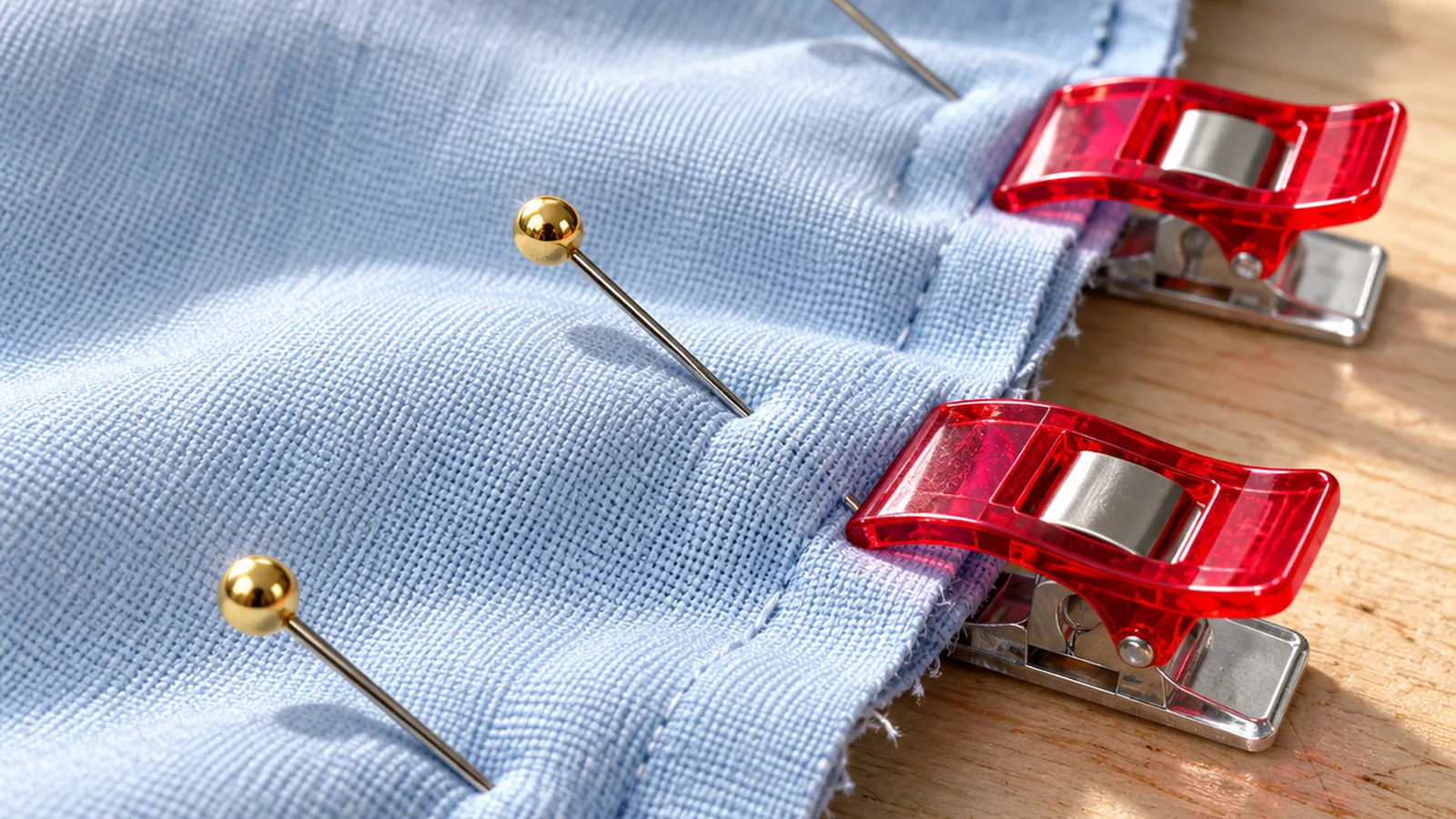
When you compare sewing pins vs clips, pins pass through every fabric layer and suit placement along a seam, spaced about 3–5 in apart. Clips grip the edge without puncturing the fabric. Clips cannot hold fabric away from the edge, so use pins for interior points.
Quick answer
Sewing pins vs clips: which should you use?
Use pins when you need exact placement or need to hold fabric away from the edge, because pins pass through the layers while clips can only grip at an accessible edge. Choose clips when a pinhole would show, since clips hold fabric without puncturing it, while pins can leave holes or cause puckering in some materials. Pull each pin out before the needle reaches it, and each clip before the fabric goes under the presser foot.
- Interior points and matching marks: use pins, and push one through a seam line to check that the markings on two pieces line up
- Seams: space pins about 3–5 in apart along the seam
- Knits: use ballpoint pins
- Vinyl, pile, or heavyweight fabric: try Clover Wonder Clips, which Clover recommends as a pin alternative for these materials
- Neck binding and narrow hems: use clips, and use pins to join larger garment sections
How Do Pins and Clips Compare?
| Factor | Sewing pins | Sewing clips | Source |
|---|---|---|---|
| How they hold | Pass through the fabric layers | Grip the fabric at an accessible edge | clover-usa.com |
| Placement away from the edge | Yes | No | clover-usa.com |
| Effect on fabric | Can puncture, leave holes, or pucker some materials | Hold fabric without puncturing it | blog.clover-usa.com |
| Marks left behind | May leave holes | Reported to leave no marks | blog.clover-usa.com clover-usa.com |
| Removal before sewing | Before the needle reaches them | Before fabric goes under the presser foot | sewing.org clover-usa.com |
Pins give you more control over alignment, but they bring the puncture and pinhole risk with them. For a seam, place pins about 3–5 inches apart so the fabric stays flat. Clips skip the holes, which matters on fabric where a pinhole would show, but you have to take them out before the presser foot reaches them. The no-marks claim comes from the clip maker, so test a scrap before you commit to clips on a visible project.
When Should You Choose Sewing Pins?
Choose sewing pins when you need exact placement or when fabric has to stay held away from the raw edge. Pins pass through the fabric layers, so they can hold material away from an edge, which clips cannot do.
Pins also help you line up matching points. Check the match before you stitch.
Pin type matters for the job. Utah State University Extension recommends:
- Sharp steel pins: for general sewing
- Ballpoint pins: for knits
- Long flat-head pins: for fleece or open-weave fabrics
Spacing changes how well a seam holds.
Pins have drawbacks. They can puncture fabric and may leave holes or cause puckering in some materials. Dull pins can also damage fabric, so replace pins once they lose their point.
Warning
Pull each pin out before the machine needle reaches it, because a hit can break, bend, or dull the needle.
When Are Sewing Clips the Better Choice?
Clips are the better choice when you need to avoid pinholes or hold layers at the edge. Pins pass through the fabric, while clips grip from the edge and don’t puncture it.
Clover recommends its Wonder Clips as an alternative to pins, especially for vinyl, pile, and heavyweight fabrics. The clips open wide to hold several layers, so they work well on bulky stacks.
Clips suit these tasks:
- Handbag handles: clipping the connectors in place
- Piping: holding the cord inside the layers
- Quilt binding: keeping the binding layers together
- Neck binding: holding the band before you stitch
- Narrow hems: keeping the folds flat
A Clover tutorial uses clips for neck binding and narrow hems, and pins for joining larger garment sections. Clover also says clips hold layered sections without distortion and work with sergers.
Warning
Take each clip off before the fabric goes under the presser foot.
The Wonder Clips have a flat base and seam-allowance markings at 1/4 in (7 mm) and 1/2 in (12 mm), so you can line up your seam as you clip. Keep the clips at the edge and move them as you sew.
How Do You Choose the Right Tool?
Use clips when pinholes matter or the edge is the only place you can grip. Clips grip at an accessible edge and can’t secure fabric away from it, so interior points need pins.
Match the tool to the task you’re doing:
- Seam lines and matching points: Push a pin through a seam line to check that markings on two pieces line up.
- Neck binding and narrow hems: Clips handle these, while pins join larger garment sections.
- Layered sections and quilt binding: Wonder Clips open wide enough to hold multiple layers.
Fabric matters as much as the task. Pins can puncture fabric and may leave holes or puckering in some materials, so try clips first when a visible hole would ruin the piece. Dull pins can also damage fabric, so swap in sharp ones before you start.
Warning
Remove Wonder Clips before you feed fabric under the presser foot.
The manufacturer’s guidance favors clips for avoiding pinholes, but it doesn’t establish that clips suit every fabric or pressure situation. Start with pins for fitting and alignment, then switch to clips at edges and on fabrics where holes would show.
Frequently Asked Questions
Can I use binder clips instead of sewing clips?
No, not as a sure swap, because the sewing clips covered here have a flat base and seam-allowance markings at 1/4 in (7 mm) and 1/2 in (12 mm) that help you line up seams. Binder clips may grip fabric differently, so test one on a scrap before you use it on a visible project.
Can I iron over sewing pins or clips?
No, pull pins out before you press, since pins can leave holes or cause puckering in some materials.
Do sewing pins leave permanent holes in leather?
Pins can leave holes in some materials, and a hole is most damaging where it would show. Clips hold fabric without puncturing it, so use them at the edge, and test a pin on a leather offcut before you commit to it on the final piece.
How many sewing clips do I need for a seam?
Add more clips where layers shift, and remove each one as the presser foot reaches it.
Are Wonder Clips worth it compared to regular pins?
Yes, for vinyl, pile, heavyweight fabric, and layered sections, because Clover recommends Wonder Clips as a pin alternative for those materials. They grip the fabric without puncturing it and open wide to hold several layers.
Conclusion
If you need exact placement or a flat seam, pick pins. If a pinhole would show, or you’re working at a clean edge like a binding or narrow hem, pick clips. Let each tool do the job it suits.
Before you cut into your good fabric, stitch a scrap with pins in one half and clips in the other. Check for holes, look at how the layers sit, and make sure you can pull each clip out before it reaches the presser foot. Then choose the tool that fits that fabric and move on.
Sources
- ucanr.edu (ucanr.edu)
- blog.clover-usa.com (blog.clover-usa.com)
- Wonder Clips® (Red) – 100 pcs. (clover-usa.com)
- sewing.org (sewing.org)
- arc.lib.montana.edu (arc.lib.montana.edu)
- extension.usu.edu (extension.usu.edu)
- blog.clover-usa.com (blog.clover-usa.com)