
Polyester vs Cotton Thread: Which Should You Use?
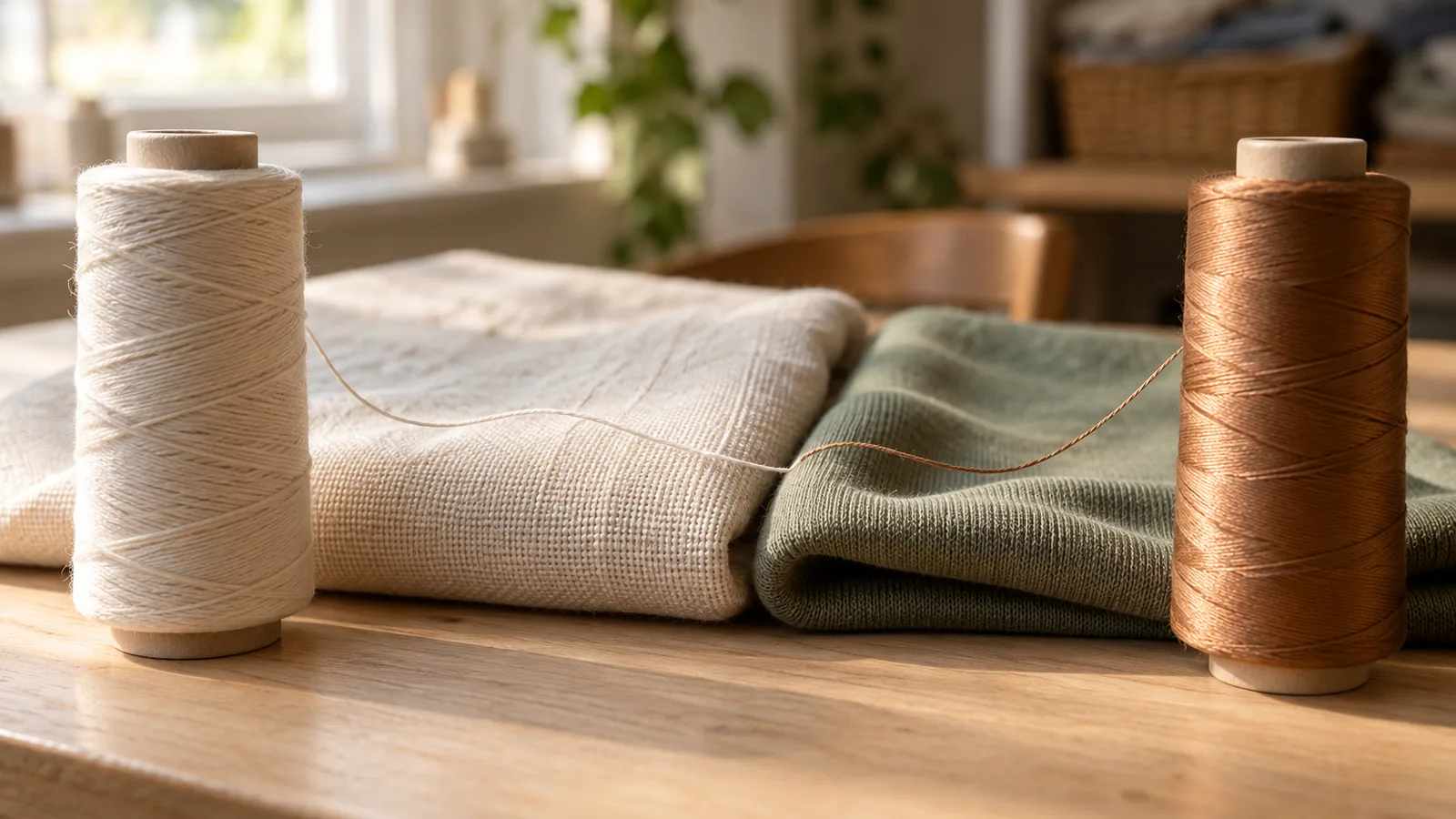
For polyester vs cotton thread, stretch is the deciding factor: polyester can take 12–22% elongation at break before it snaps, while cotton manages 5–9%. Choose cotton for woven fabric that doesn’t need to stretch, and polyester for very stretchy knits.
Quick answer
Should you use polyester or cotton thread?
Use 100% cotton thread for woven fabric that doesn’t need to stretch, because it produces flatter seams. Switch to polyester when the seam must stretch or take hard wear, since staple-spun polyester reaches 12–22% elongation at break versus 5–9% for cotton, depending on thread construction. Polyester and cotton threads can be combined as top and bobbin thread, so test your exact pairing on a scrap first.
- Woven fabric, no stretch needed: use 100% cotton thread.
- Very stretchy cotton knits: use 100% polyester thread, which stretches more than cotton-wrapped polyester.
- Plain cotton fabric: cotton-wrapped polyester is considered suitable, so decide by whether the seam needs stretch or a flatter look.
- Heavy wear, such as denim or outdoor gear: consider a polyester-core thread like Coats’ Dual Duty, which is listed for those uses.
- Fabric that shrinks: pair low-shrinkage thread with it to reduce seam puckering.
Compare polyester and cotton thread
Polyester thread is stronger than cotton of comparable size, stretches more, and resists abrasion better. Those gaps drive most polyester vs cotton thread choices.
| Property | Cotton thread | Polyester thread | Source |
|---|---|---|---|
| Elongation at break (%) | 5–9 | 12–22 | coats.com |
| Abrasion (relative index, thread to thread) | 3 | 12 | coats.com |
These figures are indicative, not guaranteed. Coats says the elongation ranges depend on thread construction, and its strength comparison holds only for threads of comparable size. The abrasion figure comes from a comparative test, so it isn’t a measure of how long a thread will last.
Shrinkage is the one property the table leaves out, because no comparable figure is published for plain cotton. Cotton shrinks more than permanent-press and synthetic threads, though the source gives no percentage or test condition. A polyester-core, cotton-wrap blend showed below 1% shrinkage at 150°C, but that result applies only to that product, not to all polyester or cotton thread.
When should you choose cotton thread?
Aurifil recommends its 100% cotton thread for these kinds of projects:
- Quilting
- Garment sewing
- Bag-making
- Sewing on a domestic machine
Fiber alone doesn’t settle the choice, though. Brother’s fabric chart lists both cotton and polyester as acceptable for fabric sewing.
The main reason to pick cotton is stretch. A seam that won’t flex much is a good fit for cotton’s lower stretch.
Note
Cotton wears less well under rubbing. It scores 3 on a relative thread-to-thread abrasion test, where spun polyester scores 12, and that test compares threads rather than predicting service life.
Before you commit to cotton on a real garment, sew a scrap of the same fabric and check the stitches. Adjust the tension if the seam looks off.
When should you choose polyester thread?
Choose polyester thread when the seam must stretch, carry strain, or survive frequent washing. Spun polyester thread is stronger than cotton thread of comparable size, although the gap depends on thread construction.
Stretch is the clearest case. For very stretchy cotton knits, Sewing & Craft Alliance recommends 100% polyester thread because it stretches more than cotton-wrapped polyester. Polyester corespun thread is recommended for knitted cardigans and sweaters when seams need both strength and elongation.
Durability is the other reason. In Coats’ thread-to-thread test, spun polyester scored an abrasion value of 12 versus 3 for cotton. That is a relative lab result, not a measure of how long a seam will last.
Coats’ 2024 Dual Duty sheet lists polyester-core thread for wash-heavy and high-wear items, citing wash-down performance and abrasion resistance. The uses it lists include:
- Jeans and denimwear
- Heavy-duty outdoor wear
- Cargo pants
- Towels and home furnishings
Thread shrinkage matters too. Pair low-shrinkage thread with higher-shrinkage fabric and you’ll cut down on seam puckering. The Dual Duty thread holds shrinkage below 1% at 150°C, but that figure applies only to its polyester-core, cotton-wrap blend. Don’t assume it holds for every polyester thread.
Choose thread to match your project
For most projects, the answer to polyester vs cotton thread depends on two things: how much the fabric stretches and how hard the seam has to work. Match the thread to those two factors, then test your setup on a scrap first.
- Woven fabric that doesn’t stretch: use 100% cotton thread for flatter seams.
- Heavy wear: polyester-core thread, such as Dual Duty, is listed for denim, cargo pants, and outdoor wear.
If your fabric shrinks, choose a low-shrinkage thread to reduce seam puckering.
Note
The shrinkage result of below 1% at 150°C applies only to the Dual Duty polyester-core, cotton-wrap blend, not to all polyester or cotton thread.
Frequently Asked Questions
Can you use polyester thread on cotton fabric?
Yes, Sewing & Craft Alliance considers cotton-wrapped polyester suitable for plain cotton fabric. Pick polyester when the seam needs to stretch or survive frequent washing, since it reaches 12–22% elongation at break versus 5–9% for staple-spun cotton.
Can you use cotton thread on polyester fabric?
Cotton thread can be used on man-made fabrics. Cotton has less give, though: staple-spun cotton breaks at 5–9% elongation. If the seam has to flex, polyester thread is the better fit.
Does polyester thread melt when pressed with a hot iron?
The one heat figure they include is for Coats’ Dual Duty, a polyester-core, cotton-wrap thread, which showed shrinkage below 1% at 150°C. That result applies only to that blend, so press a scrap seam at your iron setting first.
What is corespun polyester thread, exactly?
Corespun polyester thread has a polyester core wrapped in cotton. Coats recommends it for knitted cardigans and sweaters when a seam needs both strength and elongation. If you want lower lustre, a polyester/cotton thread can work as a substitute.
What thread works best for sewing silk fabric?
There is no silk-specific rule, so weigh seam demands, fabric weight and construction when you choose. Sew a scrap of the same silk and check the stitches before you start the real project.
Conclusion
If your seam has to stretch or take hard wear, pick polyester thread. If you’re sewing woven fabric that can stay firm, pick 100% cotton for a flatter finish. Then sew a test seam on a scrap of your exact fabric, using the same top and bobbin thread you plan to use, and adjust the tension until the stitches look right.
Sources
- coats.com (coats.com)
- sewing.org (sewing.org)
- sewingwithease.com (sewingwithease.com)
- cdn.coats.com (cdn.coats.com)
- Selecting Your Sewing Threads | Coats Group plc (coats.com)
- oaktrust.library.tamu.edu (oaktrust.library.tamu.edu)
- aurifil.com (aurifil.com)
- brother-usa.com (brother-usa.com)
- coats.com (coats.com)
- sewing.org (sewing.org)
- coats.com (coats.com)
